I'm not sure economics can explain everything but this promotes the benefits of always looking for logic and evidence
This is another book in the 'economics has the answer' collection alongside books like Freakonomics. This book is a little different because the depth and robustness of the work isn't on the same scale as it's alternatives but it serves a different purpose. The everyday examples in this book help to show strategy, economics and critical thinking as simple tools that everyone can use to solve simple problems.
Synopsis
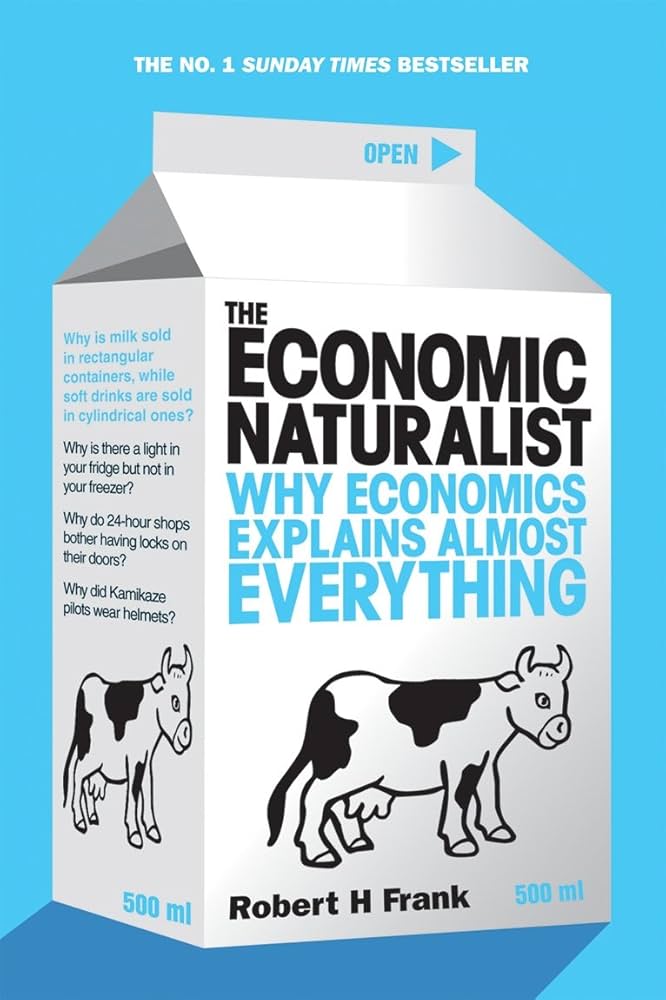
“The Economic Naturalist: In Search of Explanations for Everyday Enigmas” by Robert H. Frank explores how basic economic principles can explain a wide range of seemingly puzzling everyday phenomena.
Here’s a summary of its key aspects:
Economics in Everyday Life: The book posits that economic principles are not just for complex financial markets but can illuminate human behavior and societal phenomena in daily life, from consumer choices to political decisions.
Rational Choice and Incentives: At its core, the book highlights the assumption of rational choice—that individuals make decisions to maximize their self-interest. It emphasizes how incentives and constraints drive human behavior, explaining actions like charitable giving or queuing.
Key Economic Principles: Frank introduces and applies fundamental economic principles such as:
The Cost-Benefit Principle: Actions should be taken if the extra benefit outweighs the extra cost. This explains things like why there are Braille dots on drive-up ATM keypads or why milk cartons are square while soft drink cans are round.
Supply and Demand: These forces govern pricing strategies and market dynamics, explaining wage differences (e.g., why female models earn more than male models) and various pricing tactics like discounts or price discrimination.
Opportunity Cost: Understanding what is given up when making a choice is crucial for informed decisions.
The “No Cash on the Table” Principle: This suggests that profitable opportunities tend to be quickly exploited.
Divergence of Individual and Group Interests: The book explores situations where individual incentives conflict with collective interests, leading to inefficiencies (e.g., the “tragedy of the commons” like overfishing). It also examines how societies develop mechanisms to align these interests.
Property Rights and Regulations: It discusses how property rights are essential for economic development but are not absolute, and how governments balance societal needs with individual freedoms through regulations.
Psychological Factors: The book touches upon behavioral economics, illustrating how cognitive biases and irrational choices influence economic decisions and market outcomes (e.g., anchoring effects, framing effects).
A New Way of Thinking: Frank’s approach, often presented through student assignments, encourages readers to think like an “economic naturalist” – to observe the world around them and apply economic reasoning to understand its intricacies, making economics more relatable and engaging by explaining “everyday enigmas.”
The book aims to make economic thinking accessible and demonstrates its relevance in understanding human behavior, market dynamics, and informed decision-making in personal, professional, and societal spheres.
For more details, you can refer to: