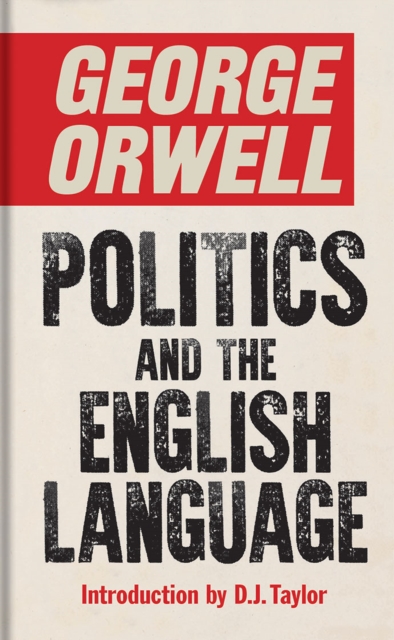
“The great enemy of clear language is insincerity. When there is a gap between one’s real and one’s declared aims, one turns as it were instinctively to long words and exhausted idioms, like a cuttlefish spurting out ink.” ― George Orwell, Politics and the English Language
“Political language – and with variations this is true of all political parties, from Conservatives to Anarchists – is designed to make lies sound truthful and murder respectable, and to give an appearance of solidity to pure wind.” ― George Orwell, Politics and the English Language
Synopsis
Orwell argues that the English language is in decline. He believed that the quality of written and spoken English was deteriorating, becoming less precise and more confusing.
He links this decline to political and economic causes. For Orwell, bad language wasn’t just a stylistic issue; it was a symptom of deeper problems in society, particularly in the realm of politics.
Bad writing obscures truth and promotes political conformity. When language is vague, it’s harder to think critically, making people more susceptible to manipulation and less likely to challenge the status quo.
Vague and clichéd language serves to manipulate public opinion. Rather than expressing clear ideas, politicians often use tired phrases and empty words to avoid saying anything meaningful, which can mislead the public.
Political language is designed to make lies sound respectable. Orwell points out that euphemisms and elaborate phrasing are used to describe terrible actions in a way that makes them seem acceptable or even benign.
It is used to give an appearance of solidity to pure wind. This means that language can be employed to make baseless or nonsensical ideas seem well-founded and important, even if there’s no substance to them.
Orwell criticises metaphors, similes, and pretentious diction. He wasn’t against these in themselves, but he decried their overuse and misuse, especially when they became stale clichés or attempts to sound more important than one was.
He advocates for clear, precise, and concrete language. Orwell urged writers to use words exactly, to choose simple words over complex ones, and to be direct in their expression.
The essay provides six rules for good writing. These practical guidelines, like “Never use a long word where a short one will do,” are designed to help writers avoid the pitfalls he identified.
These rules aim to combat the deterioration of language. By following his advice, Orwell believed that writers could resist the trends leading to muddled and dishonest communication.
Orwell believes clear thinking is impossible without clear writing. His core argument is that the way we use language directly impacts our ability to think rationally and understand complex issues.
He suggests that language can be revitalised through conscious effort. Despite his pessimism about the state of language, Orwell offered hope, implying that deliberate attention to good writing could reverse the decline.