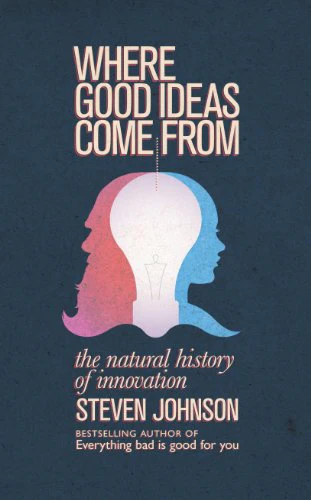
Where Good Ideas Come From
As algorithms 'perfect' what you see, it's also killing your chances of having a good idea.
Where Good Ideas come from by Steven Johnson is a brilliant book. It's another in the series of books that proves 'no man is an island'. It shows how all the work done by the people around you (or even on the other side of the world) creates an environment in which you can succeed.
This is another book which, while investigating ideas and innovation, demonstrates that the hardworking-loner theory isn’t true. We need others to do our best work.
Here’s a summary of the book’s main themes:
- The Adjacent Possible: Innovation occurs at the edge of what’s currently feasible, building upon existing knowledge and tools.
- Slow Hunches: Many significant ideas don’t emerge as sudden flashes, but rather as vague, incomplete intuitions that develop over time.
- Liquid Networks: Environments with fluid connections between diverse individuals, like cities or coffee houses, are fertile ground for ideas.
- Serendipity: Accidental discoveries and unexpected connections play a crucial role in bringing hunches to fruition.
- Error: Mistakes and “noise” in a system can lead to unexpected breakthroughs and new lines of inquiry.
- Exaptation: Existing technologies or ideas are often repurposed for entirely new functions, leading to novel innovations.
- Platforms: Innovations often build upon previous inventions, creating layers of progress that accelerate future discoveries.
- Openness and Collaboration: Shared, open environments where ideas can flow freely are more innovative than closed, proprietary ones.
- Writing Things Down: Documenting thoughts, even incomplete ones, helps to cultivate slow hunches and connect disparate ideas.
- The Power of Cities: Historically, cities have been hubs of innovation due to their dense, diverse networks.
- Nature as a Model: Johnson draws parallels between biological ecosystems (like coral reefs) and innovative human environments.
- Challenging the “Lone Genius” Myth: Innovation is more often a collective, networked process than the work of a single brilliant individual.