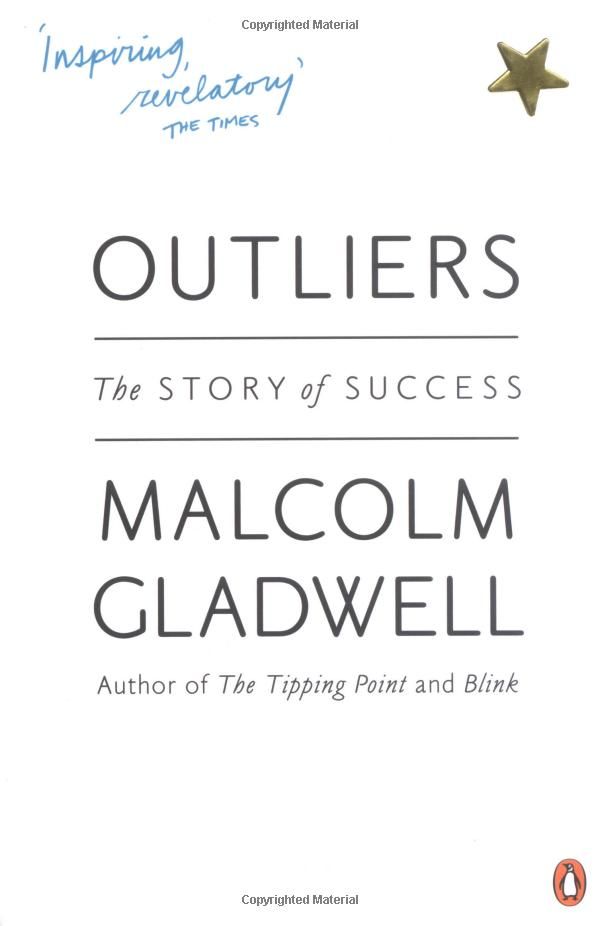
Outliers. The Story of Success
A book proves that it takes more than hard work to be a winner.
I like Malcom Gladwell, and this is good, but if you've read Tipping Point and Blink (which you should read before this) then there are probably better books to read. But, that said, this does demonstrate in a fascinating way proof that the idea that 'all you need is hard work' is bullsh*t. Hopefully seeing that builds empathy for those who haven't succeeded.
Here’s a summary of the book’s main points:
- Success is rarely purely individual effort: Gladwell argues that success is not just about innate talent or hard work.
- External factors play a huge role: Things like timing, cultural background, and opportunity are crucial.
- The “10,000-Hour Rule”: Achieving mastery in any field often requires around 10,000 hours of deliberate practice.
- Birthdates and hockey players: Children born early in the year gain physical advantages in youth sports, leading to more coaching and opportunities.
- Bill Gates’s lucky timing: His early access to computers at a specific historical moment was key to his success.
- The Beatles’ Hamburg gigs: Their extensive performing hours in Hamburg honed their skills and built their endurance.
- IQ has a threshold: Beyond a certain point, a higher IQ doesn’t necessarily guarantee greater success; practical intelligence matters more.
- Cultural legacies matter: Our inherited cultural norms and attitudes can profoundly impact our opportunities and work ethic.
- Practical intelligence vs. analytical intelligence: Success often hinges on “knowing what to say to whom, when to say it, and how to say it.”
- The Matthew Effect: “To those who have, more will be given.” Early advantages tend to compound over time.
- The importance of meaningful work: Engagement and autonomy in work contribute significantly to success and satisfaction.
- Society can create more outliers: By understanding these factors, we can create environments that foster greater success for more people.